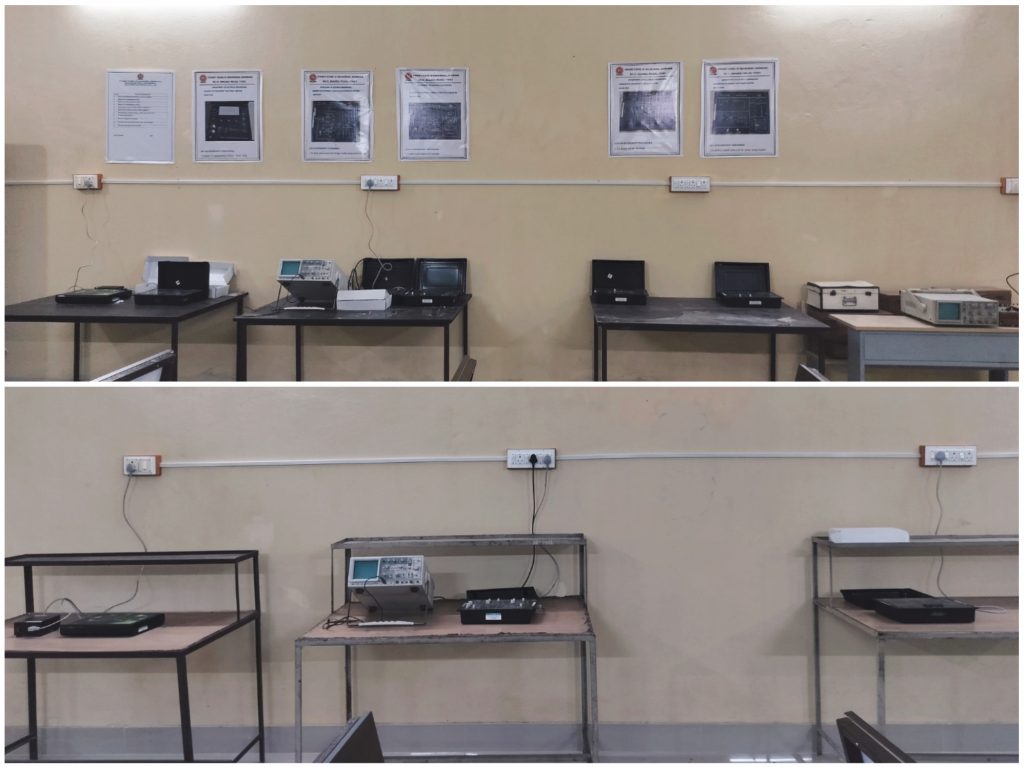
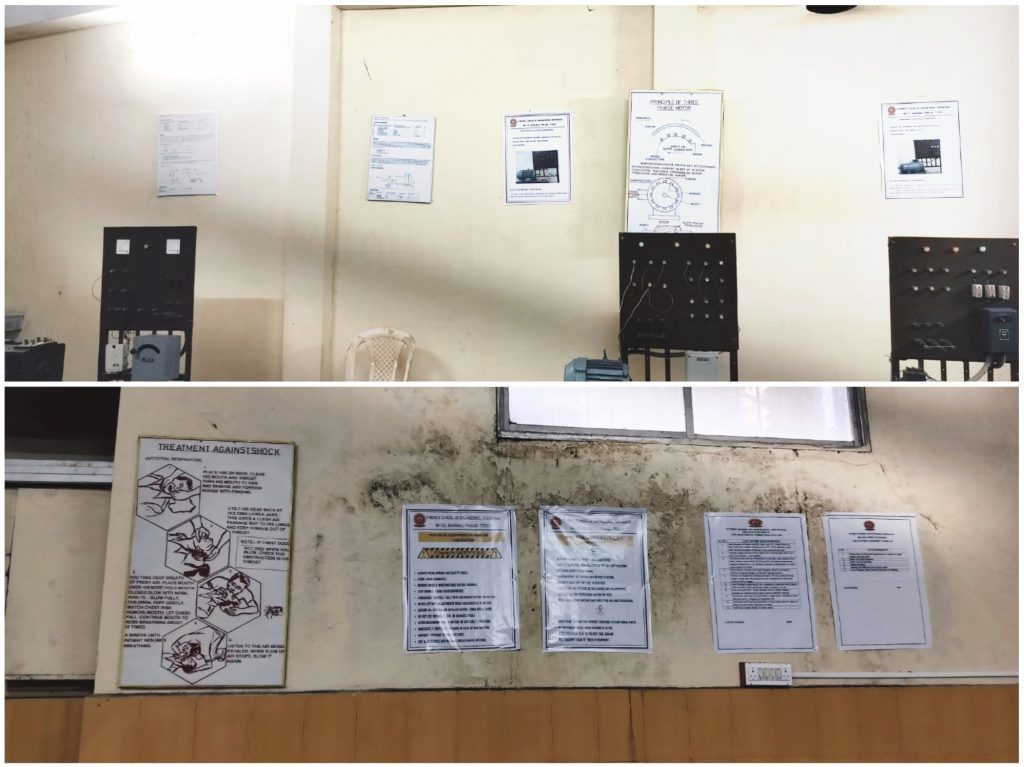
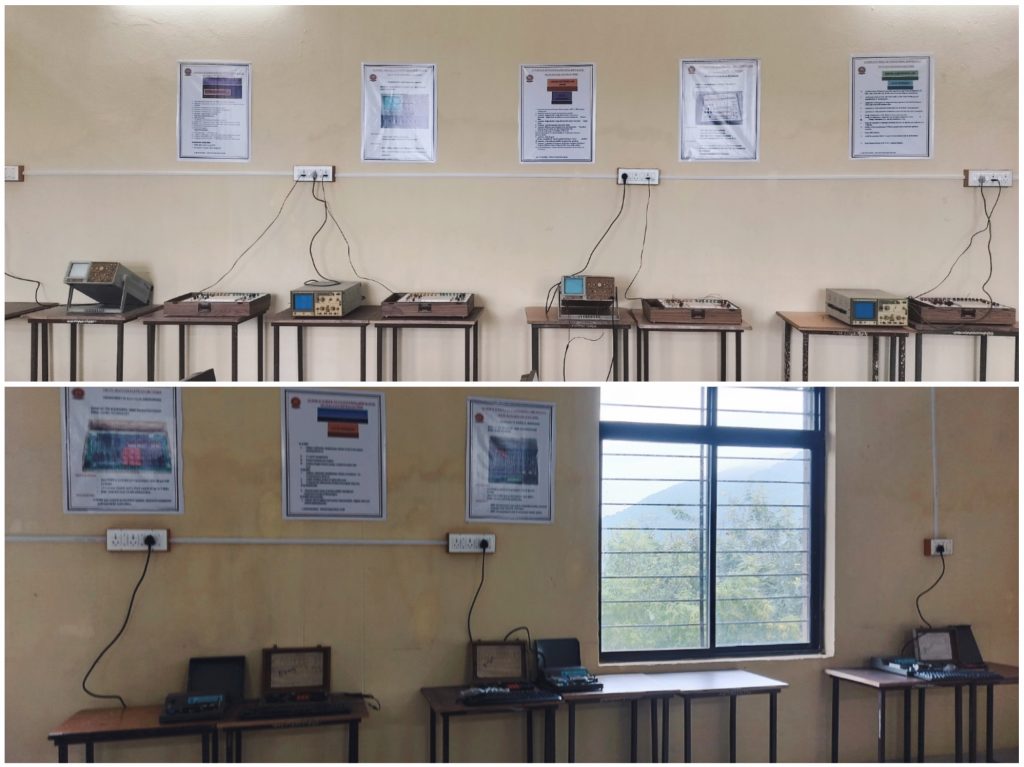
The Electrical Engineering Department atĀ Synergy School of EngineeringĀ is committed to imparting strong technical knowledge and practical skills to diploma students in the field of electrical science. The department offers a comprehensive curriculum that covers core areas such as electrical machines, power systems, control systems, industrial automation, and electrical measurements.

The department is having well-equipped laboratories supported by a team of well-qualified and experienced faculty members who are passionate about teaching and mentoring. The faculty continuously updates their knowledge through research, training, and industry interactions., the department focuses on nurturing technically competent and industry-ready professionals. Regular workshops, industrial visits, and hands-on projects ensure that students gain both theoretical understanding and practical exposure.

The department also emphasizes innovation, sustainability, and continuous learning, preparing students to meet the demands of modern industries and contribute meaningfully to the field of electrical engineering.

TheĀ DepartmentĀ  is dedicated to producing skilled and responsible diploma engineers who are equipped to meet the challenges of the ever-evolving electrical industry. The department offers a robust academic program that blends theoretical knowledge with hands-on practical training.for which Ā it is rated as one among the leading educational institutions of the State in Electrical Engineering

Well-Equipped Laboratories:
To ensure practical learning and innovation, the department houses several advanced laboratories, including:

  • Electrical Machines Lab
  • Electrical Measurement & Instrumentation Lab
  • Power Electrónicos & PLC Lab
  • Electrical Workshop (Wiring & Installation)
  • Analog Electronics Lab
  • Digital Electronics and Microprocessor Lab

Achievements & Activities:

  • Students actively participate in technical fests, seminars, and inter-college competitions.
  • Many students have completedĀ industry internshipsĀ andĀ mini-projectsĀ under the guidance of faculty.
  • The department has produced university rank holders and several students placed in reputed companies.
  • Emphasis is laid onĀ green energy concepts,Ā smart grid technologies, andĀ IoT applications in power systems.

Industry Interaction & Training:
RegularĀ industrial visits,Ā guest lectures, andĀ skill development programsĀ are conducted to bridge the gap between classroom learning and real-worldĀ applications.

ELECTRICAL MACHINE LAB
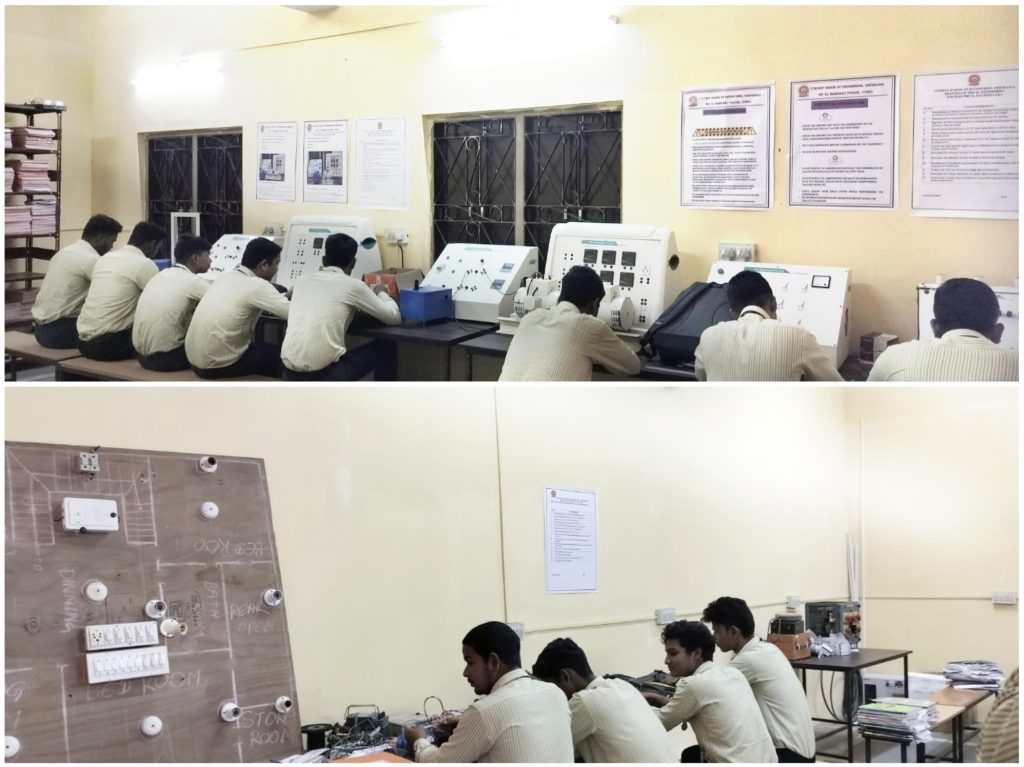
An Electrical Machine Lab is a specialized laboratoryĀ  where students and researchers’ study and experiment with different types of electrical machines. These machines are essential components in power systems, automation, transportation, and industrial applications.

The lab aims to:

  1. Provide hands-on experience with electrical machines.
  2. Understand the construction, working, and characteristics of machines.
  3. Analyze performance under different operating conditions.
  4. Study control methods and efficiency improvements.

The Electrical Measurement and Instrumentation Lab is a vital part of the electrical engineering curriculum. It provides students with practical knowledge of how to measure electrical quantities accurately and understand the functioning of various instruments used in electrical and electronic systems.

The lab aims to:

  1. Understand the principles and working of measuring instruments.
  2. Accurately measure electrical parameters (voltage, current, power, energy, resistance, inductance, capacitance, etc.).
  3. Calibrate instruments using standards.
  4. Learn about transducers, signal conditioning, and data acquisition systems.

The Power Electronics and PLC (Programmable Logic Controller) Lab is a critical part of electrical, electronics, and automation engineering programs. It helps students understand power conversion techniques and industrial automation using programmable logic controllers.

The lab aims to:

  1. Study semiconductor power devices and their characteristics.
  2. Learn power conversion circuits like rectifiers, inverters, choppers, and AC voltage Ā Ā controllers.
  3. Understand how to control motor speed, voltage, and power efficiently.
  4. Analyze waveforms and performance of converters under different loads.

The Electrical Workshop is a foundational lab designed to give students hands-on training in electrical wiring, installation, and maintenance. It focuses on practical skills needed for domestic, commercial, and industrial electrical systems.

This lab aims to:

  1. Understand the basics of electrical wiring and safety.
  2. Learn how to install, test, and troubleshoot wiring systems.
  3. Gain knowledge of tools, components, and wiring standards.
  4. Ā Prepare students for field work in electrical installation.

The Analog Electronics and Operational Amplifier (OP-AMP) Lab is a fundamental lab course in electrical, electronics, and instrumentation engineering programs. It focuses on understanding and experimenting with analog circuits, semiconductor devices, and the wide range of applications of operational amplifiers.

This lab aims to:

  1. Understand the working and characteristics of diodes, BJTs, FETs, and OP-AMPs.
  2. Design and analyze analog circuits like amplifiers, oscillators, filters, and comparators.
  3. Learn practical circuit implementation, testing, and troubleshooting.
  4. Gain hands-on experience with simulation tools and real hardware.

The Digital Electronics and Microprocessor Lab is an essential practical course in Electrical, Electronics, Computer, and Instrumentation Engineering. It introduces students to digital logic design, binary systems, combinational and sequential circuits, and low-level programming of microprocessors and microcontrollers

This lab aims to:

  1. Understand digital logic circuits and number systems.
  2. Design and implement basic digital combinational and sequential circuits.
  3. Learn architecture, instruction set, and programming of microprocessors (e.g., 8085) and microcontrollers (e.g., 8051).
  4. Gain practical experience in interfacing peripherals with microprocessors/microcontrollers.

Year of 2025-26

Semesters Subject Download
3rd Semester 2025-26
Electrical and Electronic Measurements
3rd Semester 2025-26
DC Machine and Transformer
3rd Semester 2025-26
Electrical Circuit
3rd Semester 2025-26
Introduction to Electric Generation System
3rd Semester 2025-26
Renewal Energy Power Plant
5th Semester 2025-26
Utilization of Electrical Energy & Traction
5th Semester 2025-26
Digital Electronics and Microprocessor
5th Semester 2025-26
Energy Conversation-II
5th Semester 2025-26
Power Electronics And PLC

Year of 2024-25

SemestersSubjectDownload
3rd SemesterCircuit and Network Theory
Electrical Engineering Materials
Elements of Mechanical Engineering, Theory – 3
EVS
Mathematics – III
4th SemesterAnalog Electronics and op-amp
Energy Conversion – 1
Electrical Equipment in MinesĀ 
Generation Transmission and Distribution
5th SemesterDigital Electronics and Micro Processor
HM & IFP
PE & PLC
Utilization of Electrical Energy and Traction
6th SemesterElectrical Installation and Estimating
Renewable Energy System Theory – TH-4(b)

Year of 2023-24

Semesters Subject Download
3rd Semester Circuit and Network Theory
Electrical Engineering Materials
Elements of Mechanical Engineering, Theory – 3
Mathematics – III
4th Semester Analog Electronics and op-amp
Electrical Equipment in Mines
EM & I
Generation Transmission and Distribution
5th Semester Digital Electronics and Micro Processor
Energy Conversation – II
PE & PLC
Utilization of Electrical Energy and Traction
6th Semester Electrical Installation and Estimating
Renewable Energy System Theory – TH-4(b)
YearSemesterDownload
2025-263rd Semester
2020-215th Semester
2020-216th Semester
2019-203rd Semester
2019-204th Semester
Subject Faculty Name Download
PE & PLC
Ananta Kumar Sahoo
Circuit & Network
Sunandita Sahoo
Digital Electronics and Microprocessor
Prajan Paramita Kabi
Digital Electronics
Prajan Paramita Kabi
EC-II
Amarendra Behera
EEM
Manmohan Panda
GTD
Manmohan Panda
UEET
Manmohan Panda